Repairs
Septic repairs &
tank replacement
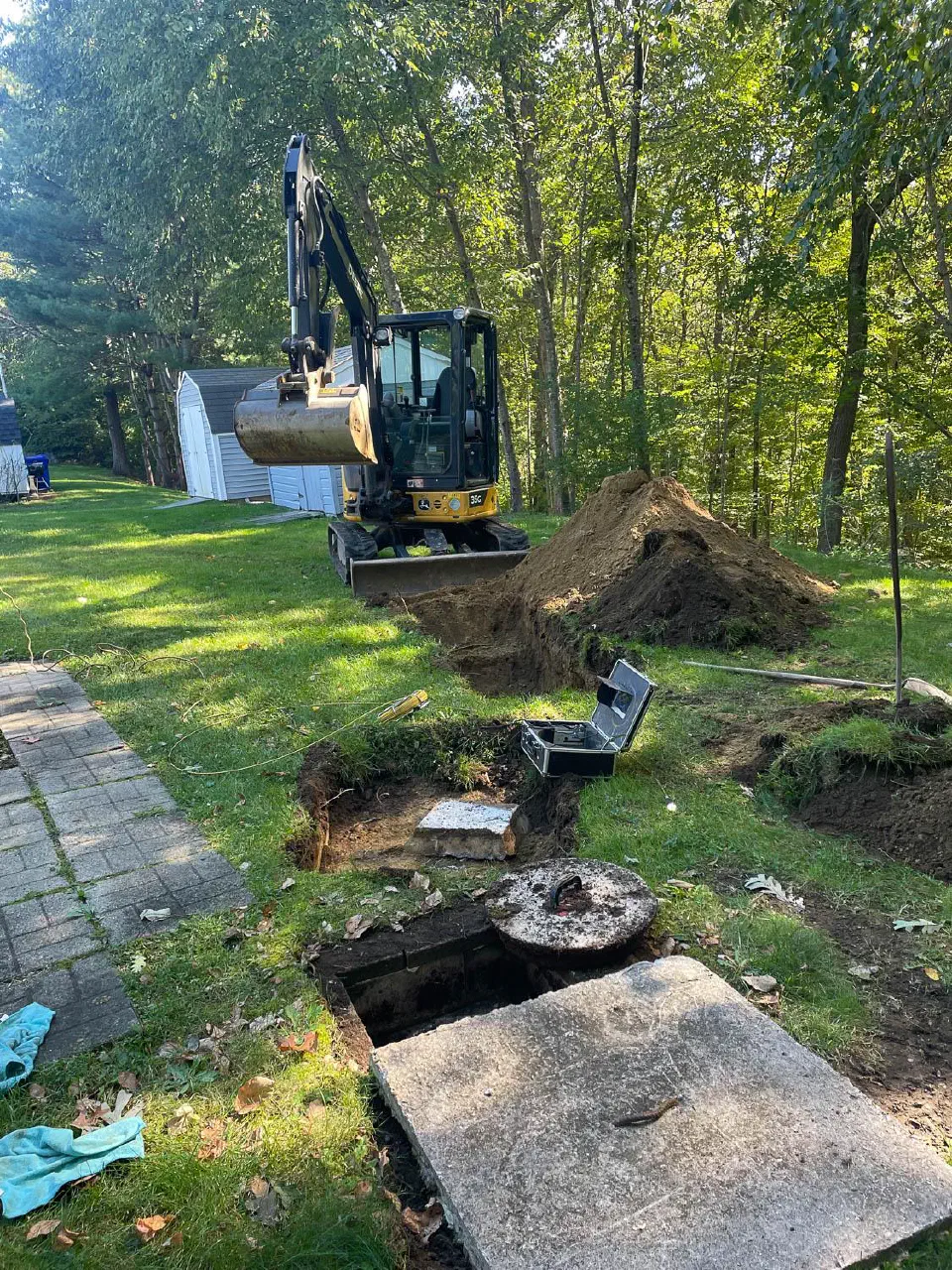
Sometimes the leaching field works fine but the tank is no longer watertight. We repair and replace tanks, baffles, pipes and covers — and if your leaching field is fully functional, a new tank may be able to connect to it.
- Free estimate
- Small repairs & tanks
- Tank sizes
- 1,000–2,000 gal
- Covers
- Within 12 in. of grade
Free estimates For small repairs and tank installations
What we repair
Five places a system can fail.
Not sure which one is yours? An investigation finds the cause first.
-
Septic tank
Cracked, leaking or deteriorating walls mean the tank is no longer watertight. If the leaching field is fully functional and the local health department approves, a new tank may connect to the existing field.
-
Inlet & outlet baffles
The outlet baffle keeps solids from reaching the leaching field, where they can clog it early. If yours has a filter, it should be cleaned or exchanged every couple of years.
-
Inlet & outlet pipes
Pipes settle. A reverse-pitched inlet can cause backups into the home; a back-pitched outlet can cause a false high liquid reading that looks like a leaching field problem.
-
Covers & extensions
Connecticut health code says covers can’t sit lower than 12 inches below the surface. We add extensions to bring them up and replace broken or worn covers.
-
Leaching field
After soil testing, we propose a design to repair or replace the field, from the most reliable leaching system designs.
Tank sizes
How big is your tank?
Tank size depends on the number of bedrooms, which helps gauge how many people will live in the home. If you're replacing a tank, this is a good starting point. Your local health department may have your system's original design on file.
Typical tank size by bedrooms
- 3 bedrooms
- 1,000 gal
- 4 bedrooms
- 1,250 gal
- 5 bedrooms
- 1,500 gal
- 6+ bedrooms
- 2,000 gal
+250 gal Generally added if the home has a garbage disposal.
Repairs
Request a
free estimate.
Free for small repairs and tank installations. Leaching field replacements require soil testing before an estimate — ask what soil testing costs at your location.
Backing up right now? Call or text.
(860) 221-8735Repair questions